
Emotional Intelligence in Indian Families: Keeping Connection Beside Duty
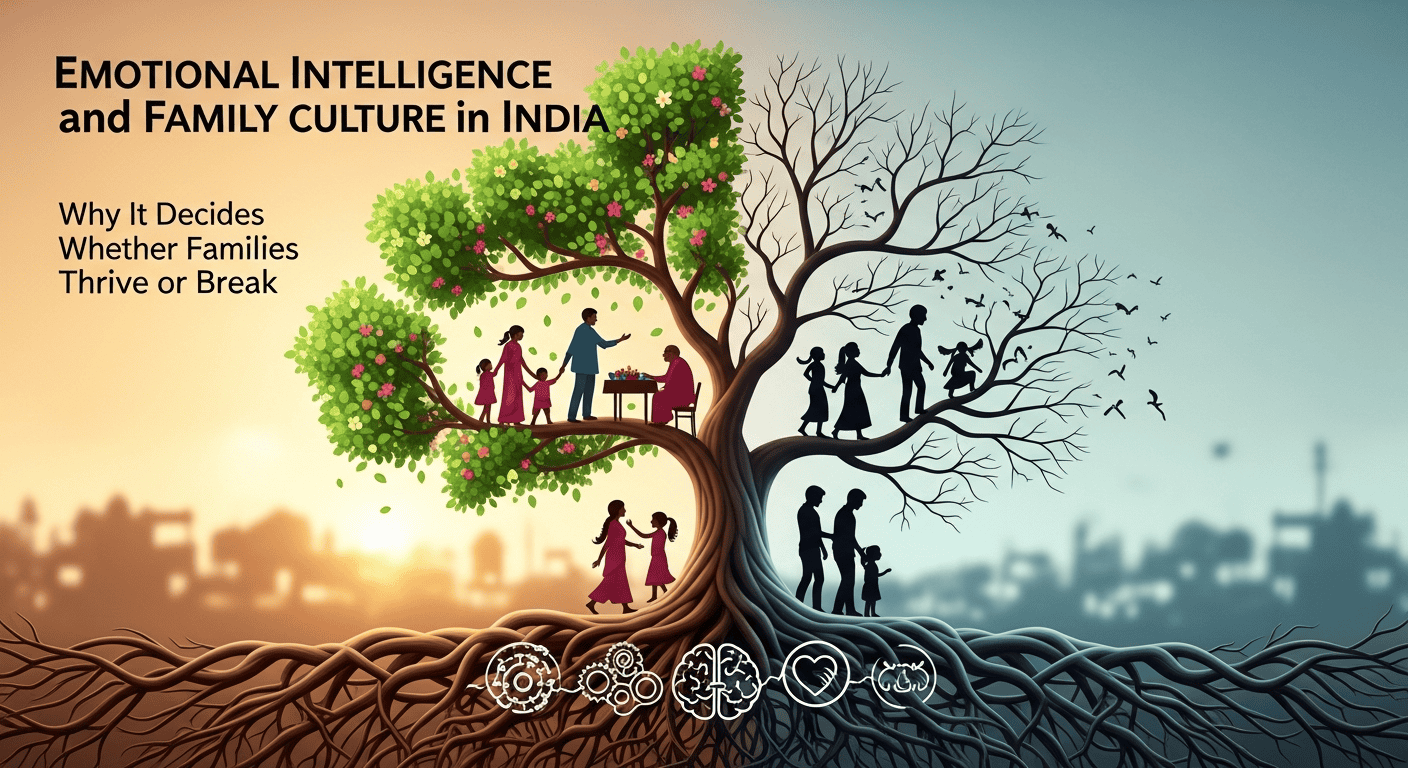
A parent can work tirelessly for a child and still find it difficult to hear, “I am scared to tell you something.” Love is present. A skill may be missing: responding to a difficult feeling without immediately correcting, dismissing, or taking it personally.
Emotional intelligence in family life means noticing feelings, managing your behaviour, and responding with care. It belongs beside responsibility, discipline, and respect.
Look at your own family's unwritten rules
Indian families are diverse. Some speak openly; others show affection through food, work, practical help, or quiet sacrifice. Joint and nuclear households can each provide support and create pressure. There is no single emotional story that describes them all.
Ask what your home has taught you:
- Can a child disagree respectfully with an adult?
- Can either partner say they are overwhelmed?
- Does a mistake lead to guidance, ridicule, or withdrawal?
- Who notices tension and takes responsibility for repairing it?
- Whose needs are repeatedly postponed?
Keep the traditions that create belonging. Reconsider the rules that make honesty costly.
The difference between love and emotional permission
Providing an education communicates care. So does being able to hear that school is going badly without making your child defend their worth.
A child who becomes quiet may need privacy, may be upset, or may be dealing with something unrelated to your parenting. Curiosity is more useful than declaring what their silence means: “You seem quieter lately. Would you like company, or would another time be better?”
Five practices that fit daily life
- Notice your reaction. “I am disappointed, and I need a moment before I respond.”
- Hear the feeling before giving a lesson. “That sounds embarrassing. Tell me what happened.”
- Keep the boundary clear. “You can be angry. You cannot hit.”
- Share responsibility. Emotional care and household coordination should not automatically belong to one parent.
- Repair across generations. “I spoke sharply. You did not deserve that. Let me try again.” An adult can apologise without surrendering their role.
Respect for elders and a child's right to be heard can coexist. A partner's request for space can coexist with commitment. The practical task is agreeing on behaviour that protects everyone's dignity.
Change begins locally
One person's steadier response can improve an interaction. It cannot guarantee that a whole family will change. Shared effort, practical support, time, and sometimes professional help are necessary.
Choose one inherited rule to update this week. Replace “We don't talk about that” with “We can talk about it respectfully, and I will listen before answering.”
Frequently asked questions
Does emotional intelligence make parenting permissive?
No. It helps parents set limits without humiliating a child and understand feelings without approving every behaviour.
How can I respect my parents while changing a family pattern?
Describe your choice without attacking their character: “I am teaching my child to explain a disagreement respectfully.” Keep boundaries consistent.
Can one parent change the family's emotional culture?
One parent can change their own contribution and invite cooperation. They cannot control others' responses or carry the entire family's emotional work alone.





Member discussion