
Fifteen Thinking Patterns That Can Keep You From Taking the Next Step
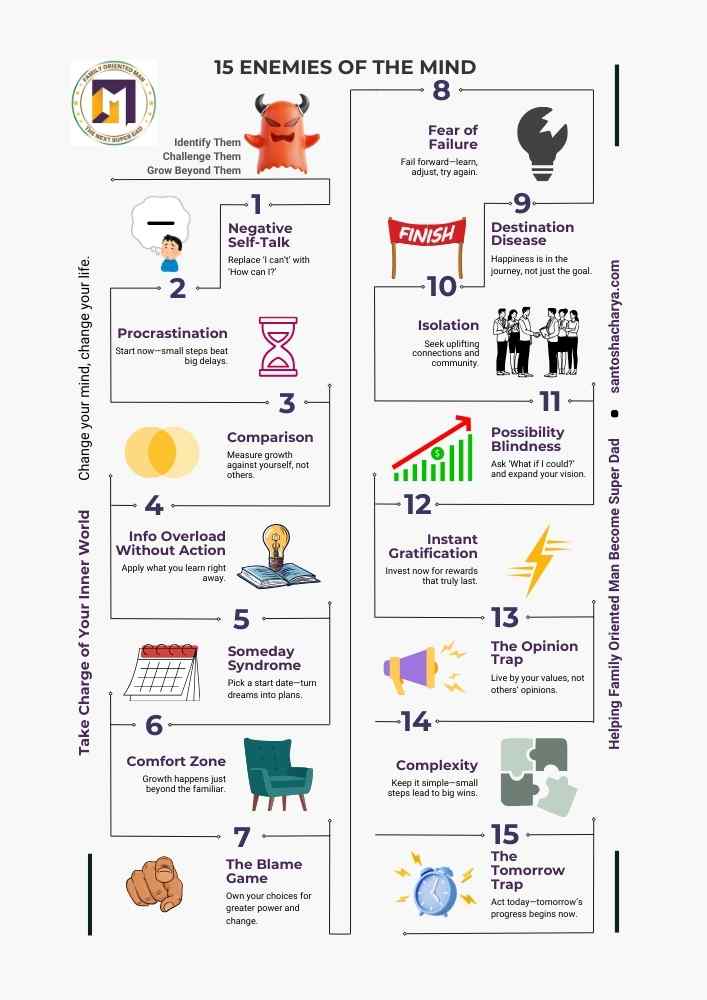
Thoughts can influence what you notice and do, but they are not enemies you must defeat or facts you must obey. These fifteen patterns are prompts for reflection. Real barriers such as money, health, discrimination, and workload also deserve practical attention.
Notice the pattern and choose a response
- Harsh self-talk: translate a total verdict into a specific difficulty you can address.
- Procrastination: identify the first manageable action and what makes starting hard.
- Comparison: check whether you are comparing your complete life with another person's selected moments.
- Learning without applying: choose one relevant idea and test it before collecting more material.
- “Someday” goals: decide whether the goal still matters and, if so, give its first step a place in the calendar.
- Avoiding unfamiliarity: try an appropriate small experiment without assuming discomfort is always necessary or beneficial.
- Blame without action: recognise what others or circumstances contributed, then identify what remains within your influence.
- Fear of failure: define the actual downside and the support or safeguards a reasonable attempt requires.
- Postponed satisfaction: notice meaningful experiences now rather than reserving all permission to enjoy life for a future milestone.
- Isolation: contact a trusted adult or seek a suitable setting for repeated connection.
- Assuming no alternatives: ask what you have not yet considered without pretending every option is available.
- Choosing immediate relief repeatedly: make the next useful action easier and allow genuine rest rather than calling every pleasure a weakness.
- Living by approval: consider feedback while retaining responsibility for your choices and values.
- Unnecessary complexity: remove a tool, step, or condition that does not serve the task.
- Repeatedly restarting tomorrow: choose a small action today, or make an honest decision to pause and review rather than promising vaguely.
Turn the list into one experiment
Choose a specific situation. Record the thought, the action it usually produces, and one alternative. For example, "I need the perfect words" may delay a repair. An alternative is preparing a brief acknowledgment and asking for a suitable time to talk.
Review the result with curiosity. Did the action help? Was the obstacle different from what you assumed? What resources were missing?
Use support without outsourcing responsibility
A trusted person can offer perspective and accountability. Agree what kind of help is wanted. They do not become responsible for monitoring your whole life.
Persistent distress, intrusive thoughts, or difficulty functioning may need professional care. A reflection list is not treatment, and failure to benefit from a habit exercise is not evidence of weak character.
The useful aim is more choice about the next action, not perfect control of your mind.
Frequently asked questions
Can I eliminate negative thoughts?
That is not the aim here. Notice a thought, assess its usefulness and evidence, and choose an appropriate action without requiring the thought to disappear.
Is procrastination always laziness?
No. Unclear tasks, fear, exhaustion, competing demands, or other difficulties may contribute. Investigate the specific obstacle rather than applying an identity label.
Does taking responsibility mean blaming myself for everything?
No. Recognise real external causes and limits. Responsibility concerns the actions and support available to you, not pretending you caused or control every circumstance.
Which pattern should I work on first?
Choose the one linked to a specific recurring difficulty. One realistic experiment produces more useful information than attempting fifteen changes simultaneously.





Member discussion