
The Hidden Family Work: Sharing the Planning, Not Just the Tasks
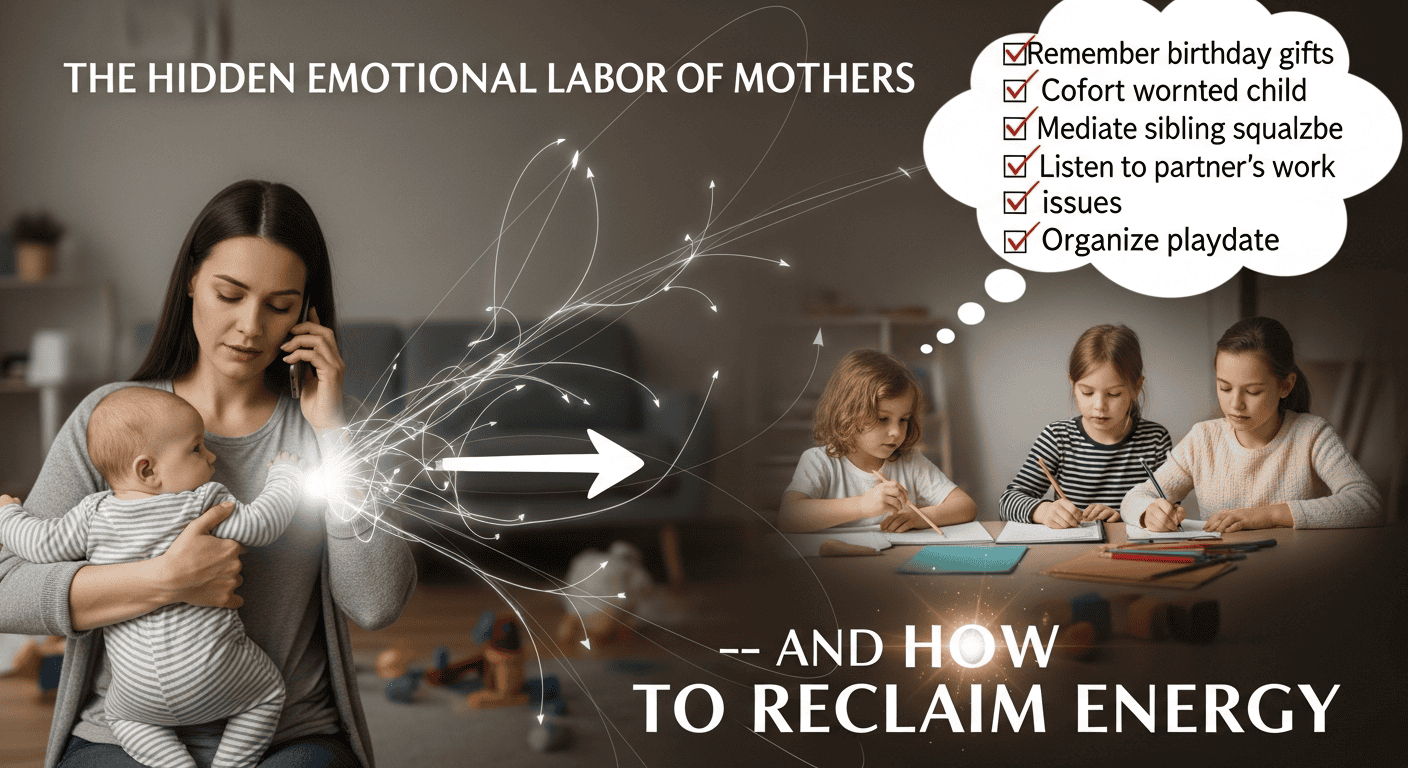
The mental load includes noticing, remembering, planning, and following up on family needs. Emotional work can include listening, handling tension, and maintaining relationships. These often overlap, but naming them clearly makes it easier to share responsibility without assuming the same gender pattern in every home.
Why “just tell me what to do” may not be enough
If one partner must notice the need, decide the task, explain it, and check completion, they remain the manager even when the other performs a step.
For example, accompanying a child to an appointment differs from owning the process of noticing the need, booking, preparing, attending, and following up. Both can contribute, but they are not identical responsibilities.
Make the invisible work visible
Together, list recurring needs: school communication, meals, healthcare, relatives, activities, supplies, and family plans. Include the work required before and after the visible task.
Ask who currently owns each part and what arrangement is realistic. Avoid turning the list into a contest over who is the better partner.
Transfer ownership by agreement
Choose one area and agree its scope, essential standards, information needed, and when to review it. The new owner should not depend on repeated reminders. Equally, both people may need to allow reasonable differences in method.
Do not allocate one person permanent responsibility for everybody's feelings. Adults should take responsibility for their own conduct and seek appropriate support.
Rest needs workload change beside permission
A quiet five minutes may be welcome, but it cannot compensate for an arrangement that leaves someone perpetually on duty. Plan recovery for both adults and include who covers the work during it.
Thank contributions specifically while making practical changes. Appreciation should not become an elegant way to preserve the same imbalance.
For this week, agree on one area of complete ownership and one protected period of recovery. Review whether the load actually moved, rather than whether the conversation sounded caring.
Frequently asked questions
Are mental load and emotional labour identical?
They can overlap but are useful to distinguish. Planning and remembering a task differ from managing interactions or providing emotional support. Name the actual work before dividing it.
Is this work always carried by mothers?
No. Mothers often describe it, but arrangements vary. Examine your household rather than assigning responsibility or ability by gender.
What does full ownership mean?
It includes noticing, planning, carrying out, and following up within an agreed scope. It should reduce the need for another adult to supervise the task.
Can rest practices fix an unequal workload?
Not alone. Recovery needs practical cover and a fairer arrangement where the existing load is unsustainable. Permission to rest is not the same as the ability to do so.





Member discussion