
Eight Relationship Habits to Practise With More Emotional Awareness
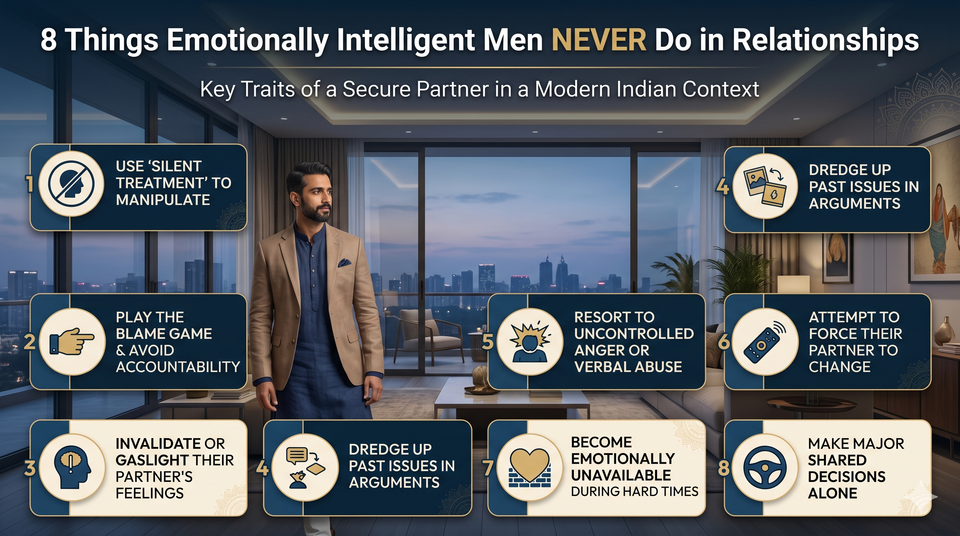
Emotional intelligence does not divide husbands into men who never make mistakes and men who do. In daily life, it shows up in noticing your state, checking assumptions, expressing needs, and repairing harmful behaviour. These are practices, not a promise that you can control every feeling or outcome.
Eight shifts worth practising
- Own your behaviour without denying influence. Your partner's actions can affect you. You remain responsible for whether you insult, threaten, or speak respectfully.
- Interrupt the impulsive response. Pause before replying. A brief pause may help you choose words; it is not a guaranteed calming formula. If needed, agree on a longer break and return.
- Check in without interrogating. Ask what has been on your partner's mind and accept that they may not want to talk immediately.
- Express vulnerability appropriately. Name uncertainty or hurt without making someone else responsible for removing it.
- Clarify instead of guessing. "You seem quiet; is something wrong?" is an invitation. "You are punishing me" is an interpretation presented as fact.
- Explain a need for space. Say why you need a pause and when you will return rather than leaving the conversation indefinitely.
- Address important disagreements. Avoidance can postpone a problem while increasing uncertainty. Choose a suitable time and a specific issue.
- Notice stress before it becomes everyone else's burden. Explain what you are carrying, maintain responsibility for your actions, and seek practical support.
Repair is part of the skill
If you fall short, acknowledge the behaviour and impact. "I interrupted and raised my voice. I want to hear the rest" gives the conversation something concrete to work with.
Do not turn an apology into a speech about your intentions or require immediate reassurance.
Start with one recurring moment
Choose the pattern that appears most often, not all eight. Identify the trigger, your usual action, and one alternative. Review whether the alternative made you more responsible and available.
You can improve your part while recognising that a relationship involves more than one person's choices.
Frequently asked questions
Do emotionally intelligent people never get angry?
They can feel anger and make mistakes. The relevant skill is noticing, choosing responsible behaviour, and repairing harm rather than claiming permanent calm.
Is my partner responsible for my emotions?
Their behaviour can influence your experience. You remain responsible for your actions, while both people can be accountable for how they treat each other.
Is silence always punishment?
No. Someone may need processing time or feel overwhelmed. Discuss the need and return plan rather than assuming a motive from silence alone.
How do I measure progress?
Look for specific changes: fewer interruptions, clearer requests, kept return agreements, and more accurate ownership after mistakes. Use experience rather than an identity label.





Member discussion