
The Tech-Wise Family: What Its Central Question Means for Your Home
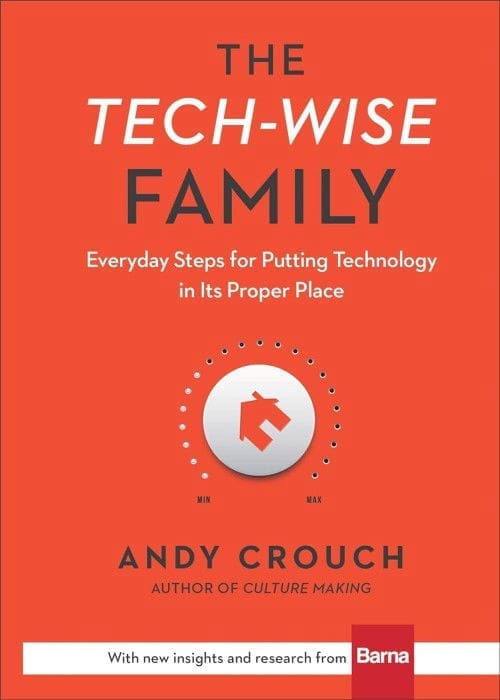
Andy Crouch's The Tech-Wise Family asks families to consider how technology shapes the people they are becoming. Its focus goes beyond limiting children's screen time: adults also need to examine whether their devices support the family life they value.
Crouch writes from a Christian family perspective. Readers can recognise that context while considering which practices suit their own beliefs and circumstances. See the author's introduction to his technology work.
Begin with the family you want to build
Before choosing an app limit, discuss what you want more room for: conversation, creativity, rest, play, or shared work. Then ask whether a particular device habit helps or interrupts it.
This changes the discussion from "Screens are bad" to "What are we making space for?" Technology can support learning, accessibility, work, and connection. Different uses deserve different decisions.
A practical application for Rewired Homes readers
The following is an application of the central question, not a list of verbatim book instructions.
- Choose one shared moment worth protecting, such as part of dinner.
- Agree which devices can be put aside and how genuine urgent needs will be handled.
- Provide something to do together rather than leaving an empty prohibition.
- Include adult behaviour in the agreement.
- Review the experience after a week and adjust it.
If a parent needs a device for work or a child uses one for communication or access, discuss that need explicitly. Fairness does not always mean identical rules.
Replace surveillance with a clear agreement
Age-appropriate parental controls may support an agreed boundary. They should not replace conversation, involvement, or a child's growing understanding of responsible use.
Explain what is monitored and why. Model the attention you ask the child to practise. A phone-free rule loses credibility if only the child has to follow it.
What this review does not claim
The earlier summary attributed an hour-for-hour screen/off-screen rule to Crouch and described a family's successful outcome without verified provenance. Those claims are not carried forward. This is a focused introduction and application, not a comprehensive chapter-by-chapter summary.
For tonight, ask: "Which family moment are we willing to protect from competing attention?" Agree on one experiment before redesigning the entire household.
Frequently asked questions
Is The Tech-Wise Family only about children's screen time?
No. Its central concern includes adult habits and how technology shapes family life and character, rather than treating children as the only people who need boundaries.
Do we need to remove technology from our home?
That is not the application proposed here. Decide which tools serve your needs and which habits interfere with the family experiences you want to protect.
What is a good first experiment?
Choose one shared moment, make a realistic agreement about devices, and plan an alternative activity. Review whether it improved the experience rather than judging success only by minutes avoided.
Is the hour-for-hour rule verified here?
No. The earlier attribution was not established by the primary material checked, so this rewrite does not present it as Crouch's advice.





Member discussion