4 min read

The Moment I Realised My Child Was Watching Who I Am… Not What I Say.

I couldn't speak. Something surged upward in my chest and stopped at my throat. A block. A sudden, hot recognition that I couldn't name in that second but could feel in my whole body.
The Moment I Realised My Child Was Watching Who I Am… Not What I Say.

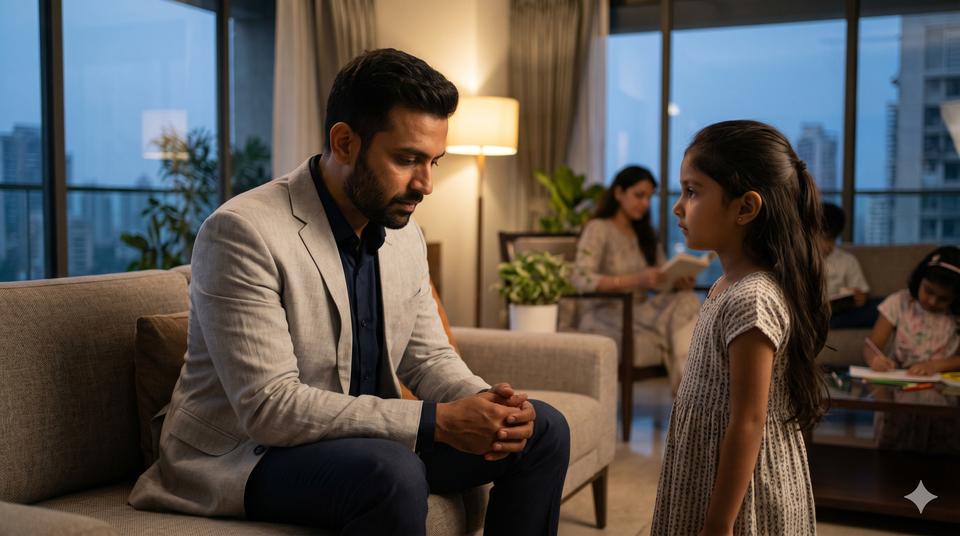
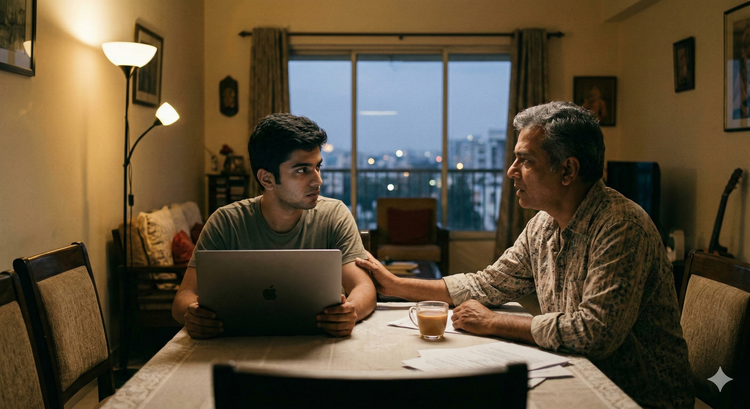
My five-year-old son looked at his mother across the dinner table and said:

"Come on, stop. You don't need to get personal about it."

The words landed in the room like something dropped from a height.

I couldn't speak. Something surged upward in my chest and stopped at my throat. A block. A sudden, hot recognition that I couldn't name in that second but could feel in my whole body.

My wife looked at me.

She didn't say anything. She didn't need to. Her glance said everything: He's repeating you.

The night before, I had said those exact words to her.

In anger. In that automatic, reflexive way words come out when you're irritated and not watching yourself — not because you chose them, but because they were just... there. Ready. Already loaded.

"Come on, stop. You don't need to get personal about it."

I had said it and moved on. The way we move on from small ruptures, telling ourselves it was nothing. Just a moment. Just words.

But my son had been in the room.

And he had heard every syllable.

The moment I recognised the sentence, the room shifted. Because with that recognition came a flood — memory after memory surfacing without invitation.

My son sitting in the stationary car, hands on the steering wheel, making engine sounds. Driving like Papa.

My son walking the way I walk. Sitting the way I sit. Holding his cup the way I hold mine.

Instance after instance arriving as evidence of something I had never fully let myself believe:

He is copying me.

Not what I tell him to do.

Me.

Each memory felt like a photograph developing in real time — and together they formed a portrait I wasn't prepared to look at.

I was his reference point for what a man looks like. What a husband sounds like. How a father moves through the world.

And I hadn't chosen that role consciously. It had simply happened — the way all the most important things happen. Quietly. Without announcement. While I was looking somewhere else.

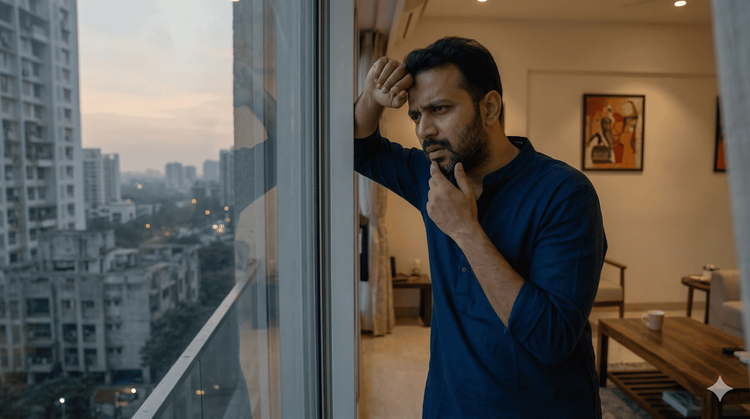
That night, I couldn't stop thinking.

Not with guilt — or not only with guilt. With something heavier and more complicated than guilt. A kind of awe that edges toward fear.

Because here's what I understood sitting in the dark:

My son was not listening to my instructions. He was absorbing my instincts.

Not what I said when I was composed and deliberate and being a "good father" — but what I said when I was tired, irritated, not paying attention. The unguarded moments. The automatic sentences. The version of me that shows up when no one is watching.

Except someone was always watching.

Someone with enormous eyes and a memory like a recording device and zero capacity yet to distinguish between "Papa at his best" and "Papa when he forgets himself."

To my five-year-old, there was only one Papa. And that Papa said those words to his mother last night.

This happened in 2006. Almost twenty years ago.

I didn't have language for it then — not the language of nervous systems or emotional modeling or co-regulation. I just had a feeling. A stirring. Something that wouldn't settle.

What I knew in that moment was simple, direct, and impossible to un-know:

He is trying to be like me.

And the question that followed — the one that kept me awake — was not "what should I teach him?"

It was: "What am I showing him?"

I won't tell you I transformed overnight. I didn't.

But something shifted in how I carried myself from that night forward. Not in my parenting — in my personhood. In how I moved through ordinary moments when I assumed no one important was watching.

Because I understood now that the most significant classroom in my son's life wasn't school. It wasn't the books I would eventually buy him or the advice I would eventually give him.

It was me. At dinner. In the car. In an argument with his mother. In the small, unwitnessed moments I had never thought to examine.

The turn wasn't dramatic. It was an internal recalibration — slow, imperfect, ongoing.

I began asking a different question before I spoke: Would I want him to repeat this?

Not as a performance. As a filter. A way of staying honest with myself about the gap between who I was trying to be and who I actually was when no one was supposed to be looking.

I'm sharing this because I know how many of us fathers are focused on the right things — the values we want to pass down, the lessons we want to teach, the men we hope our sons become.

And I'm not saying those things don't matter.

I'm saying there is something that matters more.

What you do when you're not trying.

What you say when you're not careful.

How you treat your wife when you're tired and irritated and the day has been long.

How you handle being wrong.

How you repair when you've been sharp.

Your child is not waiting for your best moments to learn from you.

He is learning from all of them.

And the most dangerous myth a father can carry is this: that his children are listening to his words.

They are not.

They are watching his life.

They are memorising his instincts.

They are rehearsing his sentences in the mirror of their own small mouths — until one day, one ordinary evening, those sentences come back across the dinner table.

And in that moment, if you're paying attention, you will see yourself.

Not the version you perform.

The version you actually are.

That is the version your child is becoming.

— Santosh Acharya