
Protecting My Child’s Dignity While Holding Him Accountable

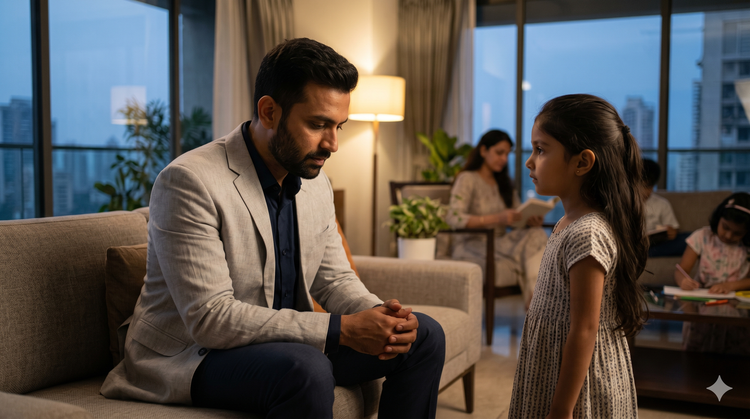
My nine-year-old was outside the principal's office while I explained what had happened. He had hit another boy after, according to his account, being teased and bullied. He had told me about it himself.
I wanted him to learn that admitting a mistake mattered. I took him to school to address his part rather than wait for a complaint.
Then the principal asked for an apology in front of the entire school.
Accountability without spectacle
I felt the familiar pressure to comply with authority. I also felt strongly that a whole-school apology was disproportionate to what I understood had happened.
I refused calmly. I could support taking responsibility for hitting without agreeing to turn my son's mistake into a public identity.
That is my account of the meeting. It does not establish the other child's experience or the school's full perspective. Those also deserved attention. Bullying does not make hitting harmless, and a child's admission does not remove the need to establish facts.
What I would want the response to include
A useful response would check whether either child needed care, hear both accounts, address the reported bullying, and agree on a proportionate consequence and repair for the hitting.
An apology to the person harmed may be appropriate, with guidance and consideration of both children's needs. That differs from requiring a child to perform remorse before an unrelated audience.
My own apology on his behalf could not replace his opportunity to understand and take responsibility in an age-appropriate way.
The internal boundary I was learning
My discomfort with disagreement was mine to manage. It should not decide what consequence my child received.
I wanted to be able to say: “I support accountability. I do not support humiliation. What alternative will address the harm and prevent a repeat?”
That approach also requires listening. A school may know something I do not. Protecting my child means staying willing to hear difficult facts, not insisting that my first interpretation is complete.
What I carried home
I told my son that hitting was wrong and that telling me the truth mattered. The work after a meeting includes learning safer responses, knowing whom to approach for help, and ensuring that repeated teasing is addressed.
The choice was not between obeying the principal and excusing my son. I could challenge a response I considered unfair while helping him face what he had done.
Frequently asked questions
Does defending my child undermine the school?
You can collaborate with the school while questioning a consequence. Ask for facts, explain your concern, and propose a proportionate alternative.
Should a child apologise after hitting?
Often repair includes an age-appropriate apology, but it should address actual harm rather than become humiliation. Consider the safety and needs of both children.
Does bullying justify hitting?
Bullying must be addressed, and hitting can still require accountability. Teach practical ways to seek help and respond safely.



Member discussion